
Industrial painting and blasting India — structural steel surface treatment and corrosion protection
Industrial painting and blasting for structural steel in India is the last step in fabrication and one of the most important for long-term performance. A structurally sound steel frame that is poorly surface-treated or poorly painted will corrode in five to ten years — and in an aggressive industrial or coastal environment, it can fail much sooner. Shot blasting and painting applied properly in a controlled workshop environment, using qualified procedures and calibrated equipment, produces a corrosion protection system that will perform for its design life without maintenance. Applied carelessly — inadequate blast profile, incorrect DFT, humid application conditions — the same paint system will fail early. Suncorporation applies industrial painting and blasting to all structural steel fabricated at our Hyderabad workshop, using our own shot blast cabinet and airless spray equipment. See our steel fabrication workshop.
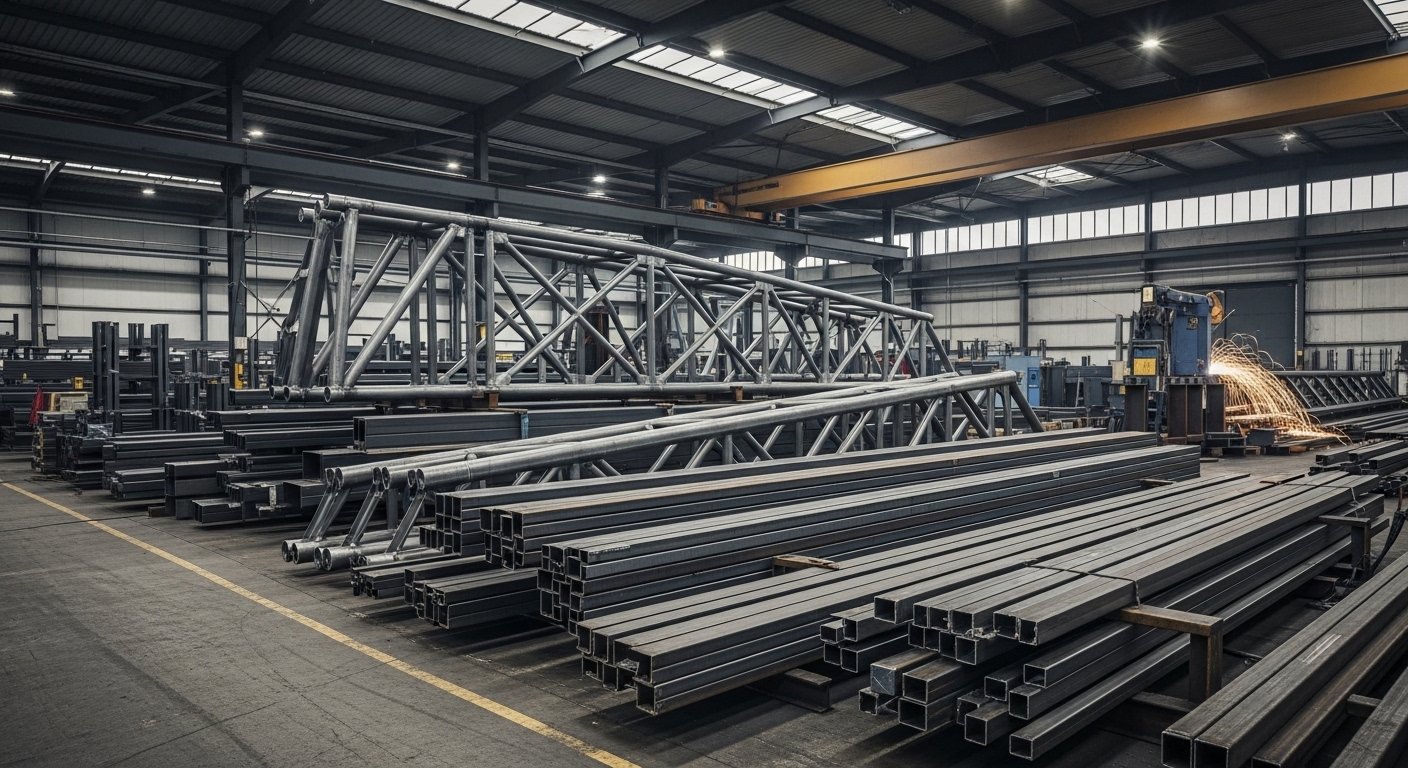
Shot blasting for structural steel in India
Shot blasting is the process of propelling abrasive steel shot or grit at high velocity against the steel surface to remove mill scale, rust, and contamination, and to create an anchor profile on the steel surface that improves paint adhesion. IS 1477 — Code of Practice for Painting of Ferrous Metals in Buildings — references the Swedish Standard blast cleanliness grades: Sa 2.5 (near-white metal) is the standard for structural steel in normal to moderately corrosive industrial environments; Sa 3 (white metal) is used for the most aggressive corrosive environments or for zinc-rich primer systems that require the highest surface cleanliness for maximum adhesion. At Suncorporation, all structural steel for industrial painting is shot-blasted to Sa 2.5 minimum before primer application. The blast profile — the anchor profile height that determines mechanical adhesion of the primer to the steel — is measured and recorded for every production batch.
Paint systems used in industrial painting and blasting India
The choice of paint system for structural steel in India depends on the corrosive environment of the project site, the required design service life, the maintenance philosophy, and any project-specific client requirements. The standard systems used in Indian industrial painting practice are:
- IS 1477 primer system — for standard industrial environments: One coat of red oxide alkyd or zinc phosphate alkyd primer applied to a Sa 2.5 blast-cleaned surface. Dry film thickness 40 to 60 microns. Suitable for inland industrial environments with access for periodic maintenance repainting. This is the standard industrial painting specification for most Indian factory and warehouse projects.
- Two-coat epoxy system — for moderate to high corrosive environments: Zinc-rich epoxy primer (60 to 75 microns DFT) on Sa 2.5 blasted surface, with epoxy mid-coat (60 to 80 microns). Total DFT 120 to 155 microns. Suitable for chemical plant environments, areas with regular water exposure, and coastal sites more than 500 metres from the high-tide line.
- Three-coat epoxy/polyurethane system — for aggressive environments: Zinc-rich epoxy primer on Sa 2.5 blasted surface, epoxy mid-coat, polyurethane finish coat. Total DFT 200 to 300 microns. Suitable for coastal and marine atmospheric environments, chemical industry, and projects requiring a high-quality visible finish. This is the system specified by Suncorporation for all seaport and marine structural steel projects.
- IRS two-coat system — for railway bridge structural steel: Zinc-rich primer on Sa 2.5 blast-cleaned surface, micaceous iron oxide intermediate coat. The IRS specification for ROB plate girders and railway station FOB steel. Suncorporation applies IRS-specified painting systems to all railway bridge and FOB structural steel.
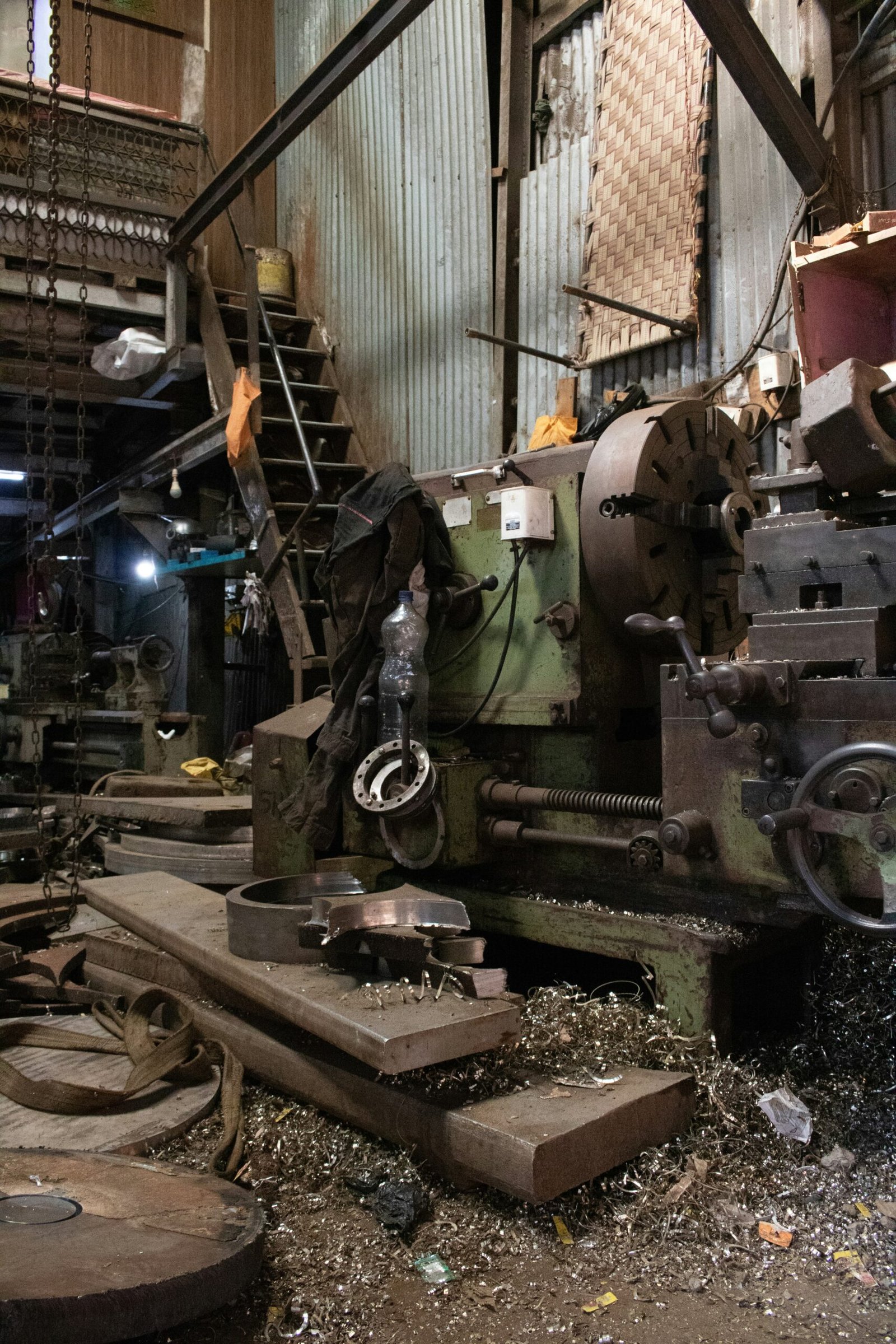
Dry film thickness measurement and paint inspection records
Industrial painting and blasting quality assurance in India requires dry film thickness measurement of every paint coat applied to every fabricated element. DFT is measured using an electromagnetic thickness gauge — calibrated at the start of each shift — at multiple points on every surface. IS 1477 specifies the minimum DFT for each paint system, and the inspection record documents the measured DFT against the specification. At Suncorporation, paint inspection records — blast grade certificate, primer DFT record, mid-coat and finish coat DFT records — are included in the quality dossier that accompanies every fabricated element to site. This documentation is required by third-party inspection agencies on ROB and airport projects, and increasingly by corporate clients on industrial building projects.
Industrial painting and blasting cost India — 2026
- Shot blasting to Sa 2.5 plus IS 1477 alkyd primer: Rs 18 to Rs 28 per sq ft of steel surface area. Standard specification for most Indian industrial building projects.
- Shot blasting plus two-coat epoxy system (120 to 155 microns DFT): Rs 35 to Rs 55 per sq ft. For chemical plant, coastal, or high-performance requirements.
- Shot blasting plus three-coat epoxy/polyurethane system (200 to 300 microns DFT): Rs 65 to Rs 95 per sq ft. For marine atmospheric exposure (ISO 12944 C5) and high-visibility finish requirements.
- IRS two-coat system for railway bridge steel: Rs 28 to Rs 42 per sq ft. IRS specification primer plus MIO intermediate coat.
Contact Suncorporation for industrial painting and blasting services. Also see: Structural steel fabrication | Custom welding services | Heavy steel fabrication | Seaport steel fabrication