
Industrial Shed Fabrication India
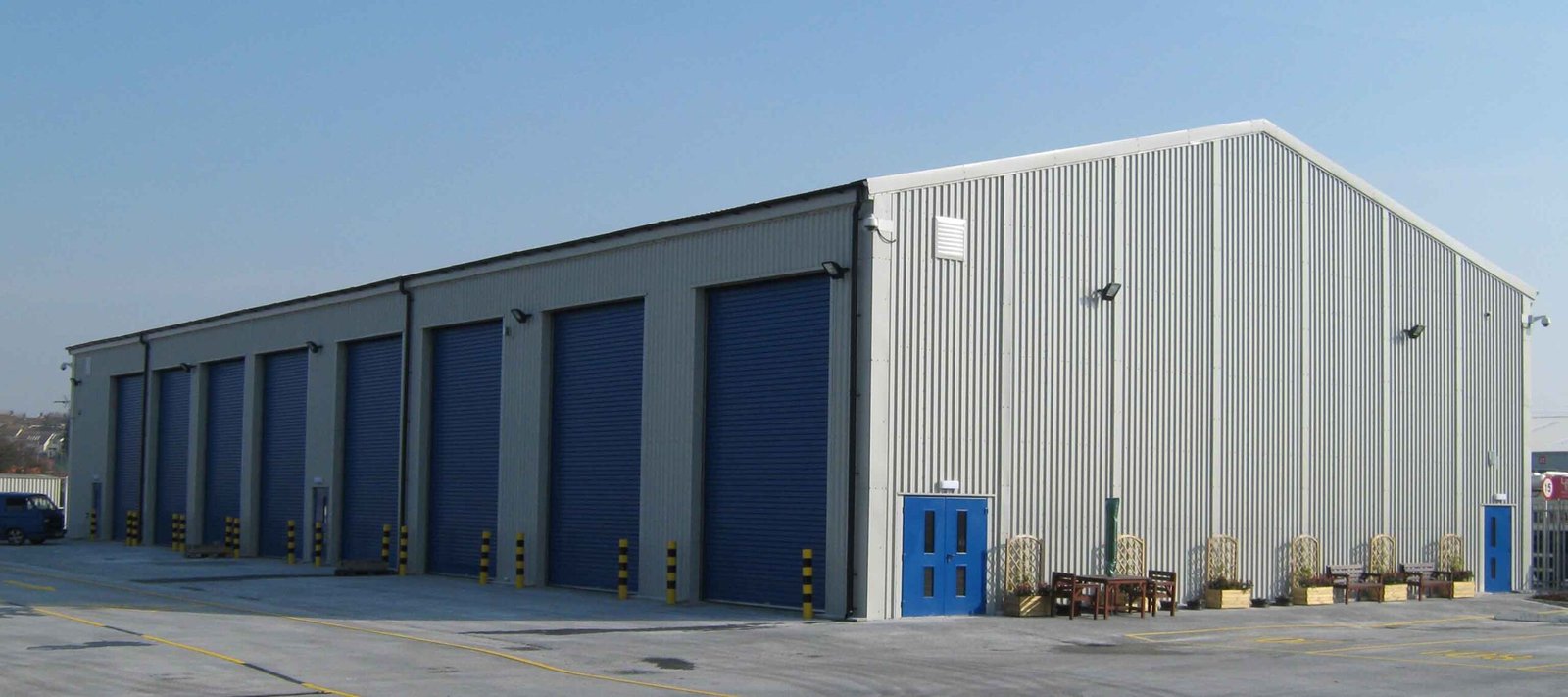
Suncorporation fabricates and erects conventional structural steel industrial sheds in India from our own workshop in Hyderabad. Frames are designed to IS 800:2007 for factories, warehouses and industrial facilities, including crane-ready bays and irregular plan shapes.
Industrial shed fabrication is the workshop conversion of hot-rolled steel into the structural frame — then site erection of that frame. The work covers columns, rafters, purlins, bracing, cladding supports and crane beams where the building requires them.
IS 800:2007 conventional industrial shed fabrication from our own Hyderabad workshop — structural steel frames for factories and warehouses, fabricated and erected across India. Request a quotation
Industrial Shed Fabrication and Erection
The commercial package is fabrication plus erection of the industrial shed frame. Shop drawings are prepared and approved, IS 2062 steel is procured to the member list, the frame is fabricated in the Hyderabad workshop, and the members are transported and erected on the prepared foundations.
Erection covers lining, levelling and bolting of portal frames, secondary steel, bracing and crane runway girders where specified. Programme duration depends on tonnage, connection complexity and site access; the typical sequence is set out under fabrication process below.
Industrial shed structural components
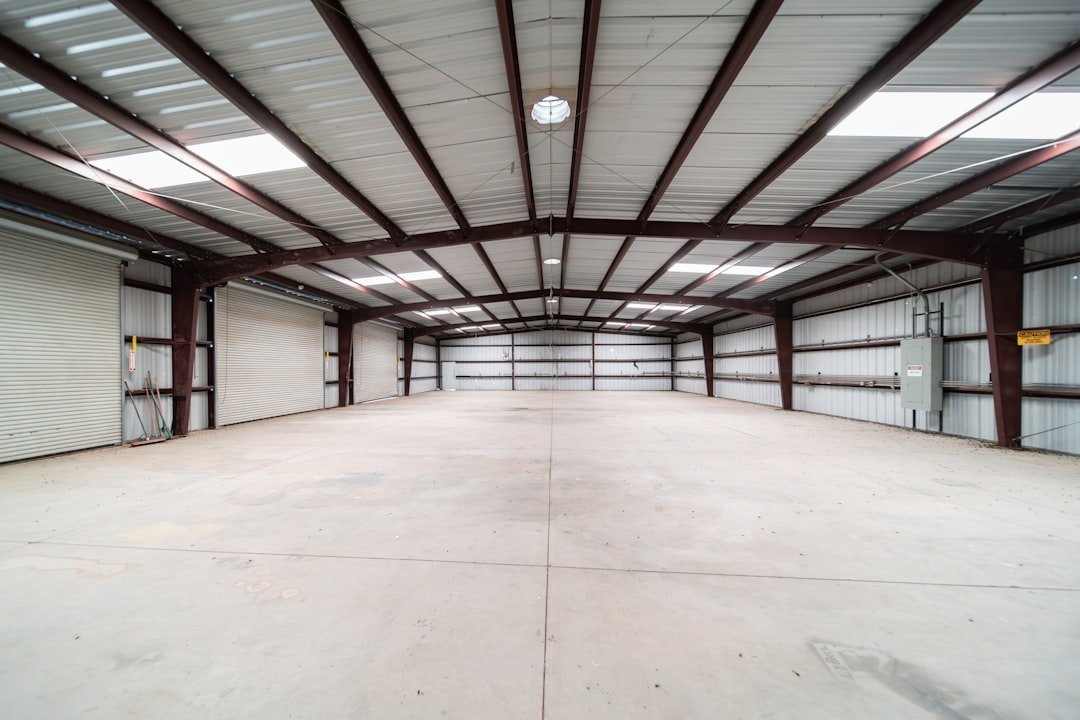
A conventional industrial shed is a hot-rolled steel frame, not a generic building shell. Primary members are columns and rafters forming portal frames for the required span, height and crane load. Secondary members are purlins spanning between rafters to carry roof sheeting, with wall girts where cladding is fixed to the sides.
Roof and wall bracing provide longitudinal stability and a load path for wind and crane surge. Cladding closes the roof and walls once the frame is plumbed. Where overhead cranes are required, crane beams are designed into the columns as runway girders rather than added as an afterthought.
Materials and standards
Industrial shed frames use IS 2062 hot-rolled structural steel for columns, rafters, purlins, bracing and built-up crane members. Grade selection follows the structural design — typically E250 for general frames and E350 where crane girders or heavier members require it.
Member design, connections and fabrication acceptance follow IS 800:2007. Mill test certificates, weld inspection records and dimensional inspection records are part of the quality file. These are material and design references, not a certification claim.
Conventional structural steel industrial sheds
A conventional steel industrial shed uses hot-rolled sections — universal columns, universal beams, channels, and angles — designed by a structural engineer to IS 800:2007 for the specific loads, spans, and geometry of the project. Conventional industrial shed fabrication handles irregular plan shapes, large crane loads, multi-span frames with different heights, heavy equipment foundations built into the structure, and future modifications more easily than a pre-engineered system. If the project has any of these characteristics, conventional fabrication is the right choice, regardless of cost.
Fabrication process
Delivery follows the same sequence as the workshop programme already used for industrial shed packages:
- Drawing approval: 3 to 5 weeks from order placement to approved shop drawings.
- Steel procurement: 2 to 4 weeks from order to delivery at the workshop.
- Fabrication: 5 to 10 weeks depending on the total tonnage and connection complexity.
- Transport and erection: 3 to 6 weeks for a 5,000 to 15,000 sq m shed.
- Total elapsed time: Typically 14 to 22 weeks from order to erection completion.
Quality control
Industrial shed fabrication is done in our own Hyderabad workshop. Frame geometry, welding and documentation stay under one responsible party rather than being traded out to whichever subcontractor is cheapest that month.
Quality files include IS 800:2007 structural calculations that a building permit authority can review, material test certificates, weld inspection records, dimensional inspection records, and painting inspection records. Erection is included in the supply-and-erect package described above.
Industrial shed applications
Warehouse and logistics sheds
A modern distribution warehouse needs 10 to 14 metres of clear internal height to accommodate high-bay racking, a column-free clear span of 20 to 40 metres, dock leveller openings in the end walls, and a floor loading capacity of 5 to 10 tonnes per square metre. Conventional structural steel is used where warehouse sheds need heavier floors, future crane provision, or a non-rectangular plan. Rectangular warehouses with light crane loads can also be built as a pre-engineered building; that system is covered on the PEB page, not as the identity of this service.
Manufacturing and factory sheds
Manufacturing plant industrial shed fabrication is more complex. A factory shed needs to accommodate overhead cranes — sometimes multiple cranes of different capacities in adjacent bays — process equipment on elevated mezzanine platforms, piping and cable tray support systems at high level, fire suppression infrastructure, and ventilation openings.
The structural frame needs to be coordinated from the design stage with the process engineer, the crane supplier, the mechanical contractor, and the fire protection consultant. For manufacturing sheds, conventional structural steel industrial shed fabrication is almost always the better choice.
Cold storage and temperature-controlled facilities
Cold storage industrial shed fabrication requires attention to insulated panel system fixing brackets, condensation drainage at column bases, and thermal bridges at the perimeter. Suncorporation coordinates cold storage industrial shed fabrication from the design stage with the cold room panel supplier, incorporating their fixing requirements into the structural steel before fabrication begins. This avoids the site drilling and modification that adds cost and delays completion on cold storage projects where the panel installation is on the critical path.
Pre-engineered buildings as an alternative
Almost all industrial shed fabrication in India uses one of two structural systems, or occasionally a combination of both on the same site. This page covers conventional hot-rolled steel sheds. Pre-engineered buildings are a separate system and remain on the PEB fabrication page.
Pre-engineered buildings (PEB)
A PEB industrial shed uses tapered primary frames — columns and rafters sized precisely by computer optimisation software to carry the applied loads with minimum steel weight. PEB industrial shed fabrication is cost-effective for rectangular sheds with spans between 15 and 60 metres, nil to light crane loads, standard wind and seismic zones, and limited future modification requirements.
A PEB warehouse or factory shed typically uses 15 to 25 percent less steel than a comparable conventional frame. The limitation is that the optimisation is done for one specific load case — modify the loads later and the existing frame may not be compatible. A PEB warehouse shed from Suncorporation for a standard 20,000 square metre distribution centre typically takes 10 to 14 weeks from drawing approval to erection completion.
Cost per sq ft in 2026
- PEB warehouse or factory shed, no crane, standard wind zone: Rs 1,200 to Rs 1,600 per sq ft supply and erect, including Galvalume roofing and cladding but excluding civil works and flooring.
- PEB industrial shed with under-slung crane up to 5 MT: Rs 1,400 to Rs 1,800 per sq ft supply and erect.
- Conventional steel industrial shed, no crane: Rs 1,700 to Rs 2,200 per sq ft supply and erect, including primer painting but excluding cladding sheets and civil works.
- Conventional steel industrial shed with EOT crane up to 20 MT: Rs 2,000 to Rs 2,600 per sq ft supply and erect.
- Heavy industrial shed with EOT crane 30 to 50 MT: Rs 2,400 to Rs 3,200 per sq ft supply and erect.
Hyderabad and South India
Suncorporation is based in Hyderabad, which puts us within practical transport distance of the major industrial areas of Telangana, Andhra Pradesh, Karnataka, Maharashtra, and Tamil Nadu. For industrial shed fabrication projects in Hyderabad and the surrounding industrial areas — Patancheru, Bollaram, Jeedimetla, Nacharam — we have delivered dozens of industrial shed projects and know the local logistics, permits, and site conditions well. For projects in other states, we regularly mobilise to Maharashtra, Gujarat, Karnataka, Tamil Nadu, and beyond.
Industrial shed fabrication FAQs
When should I choose PEB vs conventional steel for an industrial shed?
Use PEB for rectangular warehouses and factories with spans about 15–60 m, nil to light crane loads, and limited future load changes. Choose conventional hot-rolled steel when the plan is irregular, crane loads are heavy, multi-height bays are needed, or major future modifications are likely.
What information do you need for an industrial shed quotation?
Plan dimensions (length, width, bays), clear internal height, crane data if any, site location, and intended use. A sketch or architectural drawings is enough to start. We give a preliminary response within 24 hours and a budget estimate or detailed quotation within 48–72 hours when drawings are available.
How long does industrial shed fabrication take from order to erection?
Typical programmes run about 14–22 weeks: drawing approval 3–5 weeks, steel procurement 2–4 weeks, fabrication 5–10 weeks depending on tonnage, then transport and erection 3–6 weeks for a mid-size shed.
Can an industrial shed take overhead cranes?
Yes. PEB packages commonly include under-slung cranes up to about 5 MT. Heavier EOT cranes are usually better suited to conventional steel frames. Rates on this page list PEB with light crane and conventional sheds with EOT up to 20 MT and heavy sheds with 30–50 MT cranes.
What is included in the per sq ft industrial shed rates?
Published supply-and-erect ranges cover the structural package described for each line item. PEB rates typically include Galvalume roofing and cladding but exclude civil works and flooring. Conventional rates include primer painting but exclude cladding sheets and civil works, unless the quotation says otherwise.
Why does an own workshop matter for shed fabrication quality?
Own-workshop fabrication keeps frame geometry, welding quality, and documentation under one responsible party. Ask for IS 800:2007 structural calculations, material test certificates, weld and dimensional inspection records, and whether erection is done by the fabricator’s own teams.
Request a quotation
To get a reliable quote for your industrial shed fabrication project, we need: the plan dimensions of the shed (length, width, and number of bays), the clear internal height, the crane specification if cranes are required, the location of the site, and the intended use of the building. A sketch or a set of architectural drawings is enough to get started. We respond to all industrial shed fabrication enquiries within 24 hours with a preliminary response, and within 48 to 72 hours with a budget estimate or a detailed quotation if drawings are available.
Contact Suncorporation for industrial shed fabrication. Also see: Pre-engineered buildings India | Crane girder fabrication | Structural steel fabricators Hyderabad | Heavy fabrication | Pipe rack fabrication | Crane girder structures | Industrial platforms | Process plant structures
Shed packages frequently combine portal steel with welded built-up beams, custom built-up columns, crane runway girders, custom plate girders, and maintenance platforms under fabricated structural steel delivery.
Roof steel and canopy packages — including fabricated trusses — are often released with the same shed or building steel order.