
Pipe Rack Fabrication India
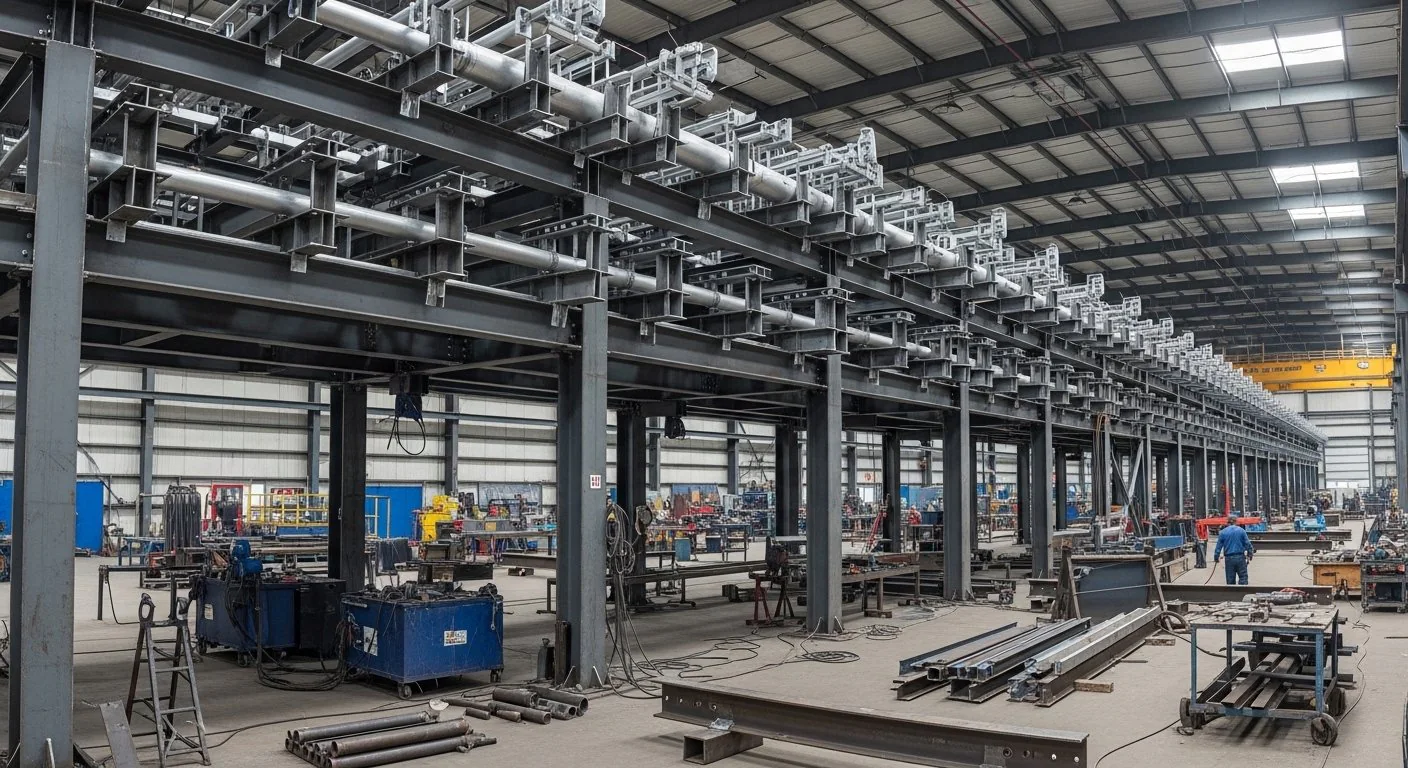
Pipe rack fabrication is the shop fabrication and site erection of the steel frames that carry process piping, cable trays, and instrument lines through a plant. Sun Corporation Fabricators & Engineers provides pipe rack fabrication in India from our Jeedimetla, Hyderabad workshop, fabricating pipe rack structures for process plants, chemical and petrochemical facilities, power projects and material-handling applications. We fabricate structural bents, tiers and support frames using IS 2062 E250 and E350 steel grades, with WPS/PQR documentation, weld inspection and traceability. Fabrication records can include mill certificates, weld maps and NDT documentation as required for project review. Submit your drawings or structural requirements through the enquiry form for a technical proposal.
What we fabricate
Typical pipe rack packages include portal frames, trestle bents, longitudinal beams, bracing, pipe shoes and guides (where shown on drawings), and connection plates for site bolt-up. We work from the structural engineer’s approved GA and connection design — shop drawings are prepared in-house before cutting starts.
| Parameter | Typical range |
|---|---|
| Material | IS 2062 Grade A/B; IS 8500 where specified |
| Design basis | IS 800:2007; project-specific load combinations |
| Connections | Bolted site splices; shop-welded sub-assemblies |
| Welding | Qualified WPS/PQR (IS 9595); WPQ welders (IS 7307) |
| NDT | UT/MPI per ITP; third-party when contract requires |
| Project size | 50 MT minimum; multi-level racks to 500+ MT |
| Delivery | Hyderabad workshop; pan-India transport and erection |
Quality dossier and traceability
Pipe rack contracts usually need more than fabricated steel at dispatch. We issue MTCs with heat traceability, weld maps, NDT reports, dimensional checks to IS 800 Annex F, coating records, and packing lists with piece marks — aligned to your submittal register. Credentials and sample dossier structure are on our manufacturer credentials page.
Sectors and geography
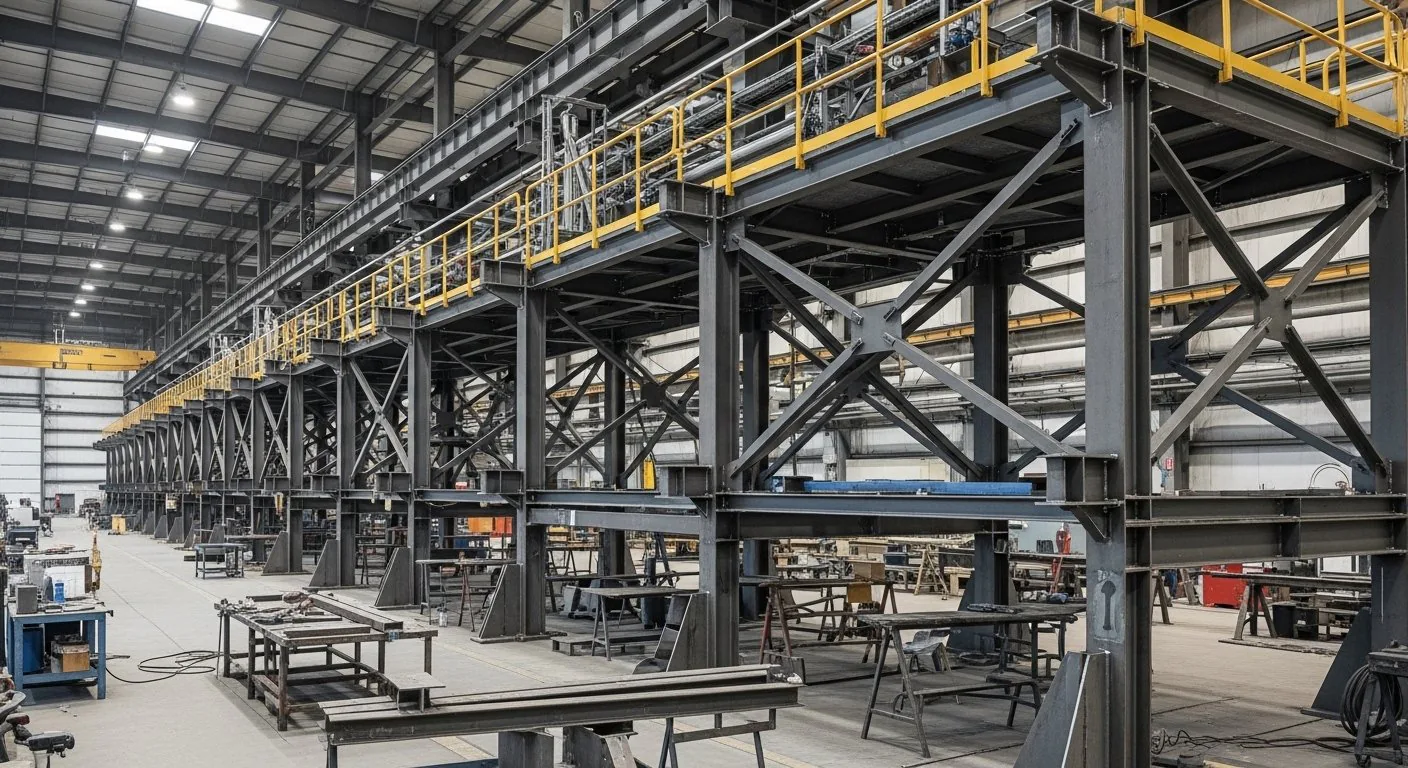
Pipe racks for thermal power BOP, pharma and chemical plants in Telangana, cement and material-handling sites, and brownfield tie-ins across India. Local fabrication in Hyderabad reduces freight for projects in Telangana and Andhra Pradesh; we routinely supply racks to Maharashtra, Karnataka, Gujarat, and other states with our own transport coordination.
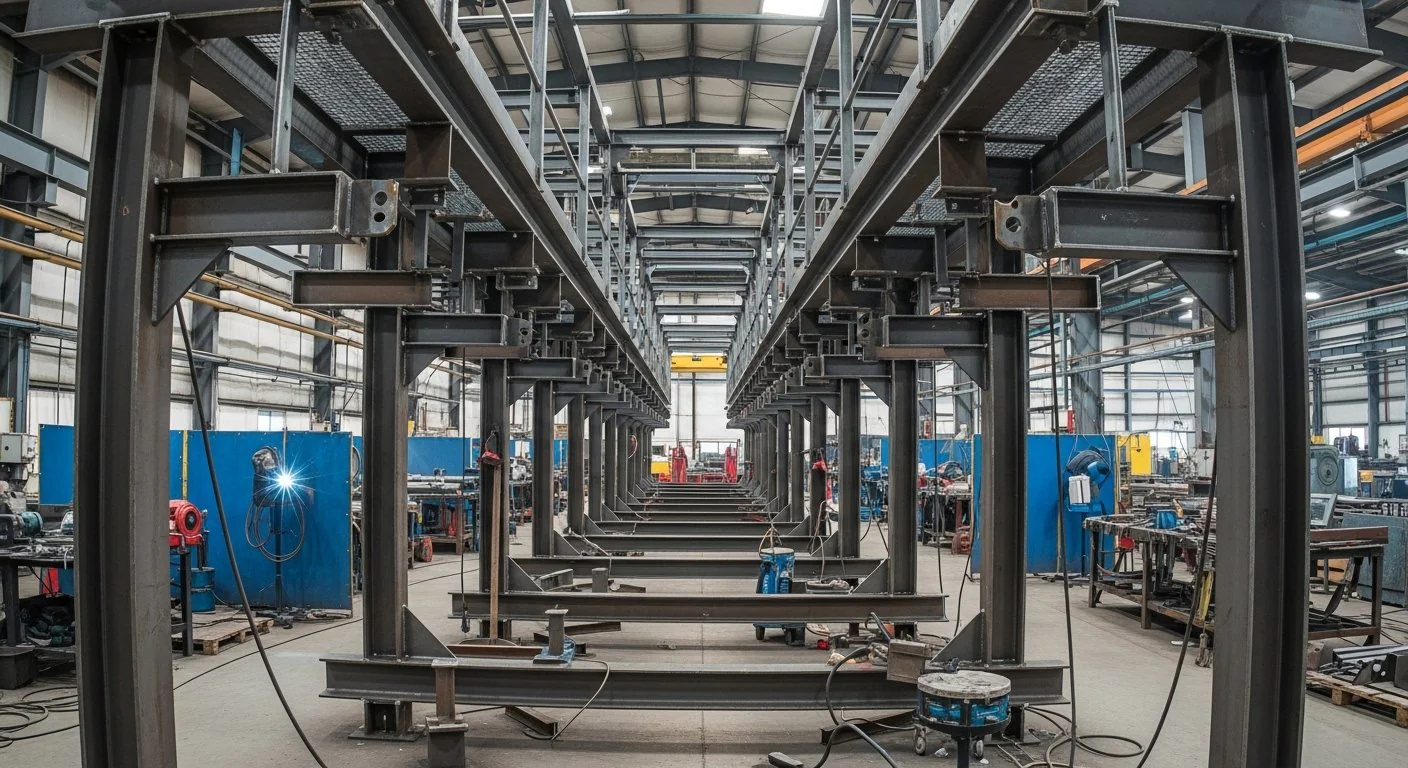
Pipe rack fabrication for process plants, chemical and petrochemical facilities, power projects and material-handling corridors requires multi-tier steel, bent spacing, shop-assembled structural bents and licensor hold points — without blurring into piping fabrication or turnkey plant supply. Sun Corporation Fabricators & Engineers fabricates process plant pipe racks, utility corridors and equipment support structures from issued-for-fabrication drawings. Shop-assembled bents and tier frames are prepared for site bolt-up where transport permits.
Pipe rack configurations
Pipe rack configurations follow the piping layout. Single-tier racks carry a compact utility or process run; multi-tier pipe racks stack process, utility, and cable-tray levels so corridors stay clear at grade. Portal frames and trestle bents repeat along the route at the bent spacing shown on the GA — typically 6 m to 12 m — with longitudinal beams spanning between bents and transverse members framing each tier width.
Utility routing on the rack is set by the piping and electrical layouts: process lines on designated tiers, utilities and firewater on others, cable trays on their own level where shown. Expansion considerations matter early — future expansion allowances for additional lines or an extra tier should be fixed on the GA before shop drawings lock member sizes and connection plates. Structural bracing (horizontal and vertical X-bracing or portal action) provides stability and load transfer to the bents. Maintenance access — stair towers and tier platforms — is often bundled in the same rack package so operations can reach valves and instruments without temporary scaffolding.
Pipe support philosophy is owned by the piping stress package: shoes, guides, and anchors land on the structural steel where the drawings show them. We fabricate those support interfaces when they appear on the structural or piping drawings; we do not invent support locations. Leaving spare bay width or stub connections for future expansion, when the design calls for it, avoids cutting into finished steel later.
Technical Specifications — Pipe Racks
| Parameter | Typical Range / Standard |
|---|---|
| Structure type | Multi-tier portal frame / trestle bent pipe rack |
| Material | IS 2062 E250 / E350 sections and plate |
| Design code | IS 800:2007; loads per IS 875 Parts 1–3 |
| Tier count | 1–5+ levels per piping layout |
| Bent spacing | 6 m – 12 m typical (per structural GA) |
| Connections | Bolted site splices; shop-welded sub-assemblies |
| Welding | WPS/PQR per IS 816 / IS 9595 |
| NDT | UT / MPI per project ITP; third-party when required |
| Coating | Shot blast, primer, paint or HDG per project spec |
| Package size | 50 MT minimum; large corridor programmes 500+ MT |
Pipe Rack Components
| Component | Function | Fabrication Note |
|---|---|---|
| Portal columns / bent legs | Carry vertical reactions from tiers | Rolled or built-up; base plates to civil anchors |
| Longitudinal beams (rack girders) | Span between bents; support tier loads | Often built-up for long spans — see built-up beam fabrication |
| Transverse beams | Tier framing between longitudinal members | Sized for pipe cluster width per GA |
| Bracing (horizontal / vertical) | Stability and load transfer to bents | X-bracing or portal action per design |
| Pipe shoes & guides | Pipe support interfaces | Where shown on structural/piping drawings |
| Stair access & platforms | Maintenance routes at tier levels | Often bundled in rack scope |
| Splice plates & connections | Site bolt-up between modules | Match erection sequence and crane reach |
Design considerations
Rack design loads are developed by the structural engineer on the GA. Dead loads cover the steel self-weight and permanent attachments. Live loads cover maintenance and temporary construction loads on platforms and walkways. Pipe loads — operating weight, fluid content, and hydrotest where applicable — come from the piping stress package and are applied to the tiers as shown. Thermal expansion of long pipe runs generates forces and movements that the support philosophy (guides, anchors, loops) must accommodate; the steel frame must be stiff enough for the reactions shown on the drawings without redesigning the piping route.
Wind loads on pipes, trays, and the frame itself follow IS 875 Part 3 for the site wind zone. Seismic considerations apply where the project uses IS 1893 load combinations on braced rack frames — again, these are design inputs on the GA, not workshop decisions. Maintenance access requirements affect stair and platform locations and may add local live-load cases at tier levels. We fabricate to the approved member sizes and connection details; we do not reinterpret piping or civil load data.
Applications — Process and Utility Corridors
- Refinery pipe racks — process and utility tiers linking crude, process and offsite units (refinery steel structures)
- Petrochemical plants — high-tier racks with wind exposure per IS 875 Part 3
- Chemical plants — corrosion-zone coating systems on rack steel per project spec
- Power plants — BOP utility corridors, cable tray tiers and auxiliary piping supports
- Steel plants — utility and process corridors serving mills, gas lines and material-handling interfaces
- Cement plants — process and utility racks between mill, kiln and packing areas
- Water treatment plants — chemical-dosing and utility corridors with coating systems per the project specification
- Process plants — cross-unit pipe rack structures coordinating piping stress, civil and electrical interfaces (process plant structures)
Access and secondary steel on the same corridor often includes industrial platforms and stair towers. Where racks feed equipment pads, packages may also include equipment support structures. Elevated conveyor crossings that share the plant grid are covered under conveyor gallery structures.
Rack steel is frequently released early in EPC construction programmes — workshop slot and bent module sequencing should align with your site crane and civil anchor readiness schedule at enquiry stage.
Manufacturing Process
- Drawing approval — GA and connection design signed off; shop drawings issued with piece marks
- Material procurement — IS 2062 sections/plate with MTC verification against grade ordered
- Cutting & drilling — CNC processing of members and connection plates
- Shop assembly — pipe rack modules as structural bents and tier frames for site bolt-up, where transport permits
- Welding & NDT — coded joints per WPS; hold points per ITP
- Blast, paint & mark — tier and bent IDs for site erection sequence
- Dispatch & erection support — phased delivery matched to site programme
Full industrial steel structures capability is on our Structural Steel Fabrication Guide.
Quality Control
QC covers material traceability (heat number to piece mark), fit-up and weld visual inspection, NDT on joints listed in the ITP, dimensional checks on bent spacing and tier elevations against approved shop drawings, and coating DFT before dispatch release. Customer or third-party inspection is accommodated when the purchase order requires it — we hold modules and present them against the agreed checklist. Non-conforming members are quarantined until rework or documented concession — supporting licensor review at fabrication hold points without delaying erection windows.
Applicable Standards
| Standard | Role on Pipe Rack Packages |
|---|---|
| IS 2062 | Hot rolled sections and plate material grades; MTC requirements |
| IS 800:2007 | Structural member and connection design basis; fabrication tolerances |
| IS 875 | Dead, live and wind loads on rack frames and tiers |
| IS 816 / IS 9595 | Welding procedure and quality |
| Project / licensor spec | Piping load interfaces, coating, supplemental NDT |
Code references: IS 2062 Steel Grades Guide · IS 800 Guide · IS 875 Structural Design Loads Guide
Pipe Rack vs Conventional Support Structures
| Criteria | Pipe Rack | Conventional Support Frame |
|---|---|---|
| Function | Multi-tier corridor for piping, cables and instruments | Localised support at equipment or valve stations |
| Geometry | Repeated portal bents with longitudinal tiers | Discrete frames at point locations |
| Loading | Piping DL/LL, hydrotest, thermal, wind on pipes | Equipment dead/live loads primarily |
| Coordination | Piping stress, civil, electrical tray layouts | Mechanical vendor interfaces |
| Corridor package release | Corridor tonnage packages with phased release | Area-specific smaller packages |
| Fabrication | Modular bents; standardised tier framing | Custom one-off connections |
Pipe rack fabrication FAQs
What is included in a pipe rack fabrication scope?
Structural steel only — portal columns, longitudinal and transverse beams, bracing, connection plates and pipe shoes where shown on drawings. Piping fabrication, valves, insulation and civil works are outside scope unless explicitly included in contract.
What drawings do you need for a pipe rack RFQ?
Structural GA with tier elevations, bent spacing, load summary or piping interface note, coating specification, and scope boundary for fabrication only vs fabrication and erection. IFC or enquiry GA allows fastest quotation.
Do you fabricate refinery and petrochemical pipe racks?
Yes. We supply refinery pipe racks and petrochemical corridor steel from approved drawings with mill certificates, weld maps and NDT documentation formatted for project review. See our refinery steel structures page for sector context.
What is the minimum project size for pipe rack fabrication?
Typical minimum engagement is 50 MT structural steel per package; multi-corridor programmes to 500+ MT are within normal workshop planning.
How quickly can you respond to a pipe rack enquiry?
Preliminary technical response within 24 working hours; detailed quotation within 48–72 hours when drawings and scope boundaries are available.
What is a multi-tier pipe rack?
A multi-tier pipe rack stacks process, utility and cable-tray levels on repeated portal or trestle bents so plant corridors stay clear at grade. Tier count and elevations follow the piping layout on the structural GA — typically one to five or more levels.
How are thermal expansion and pipe loads handled?
Pipe operating weight, hydrotest and thermal movement come from the piping stress package. Shoes, guides and anchors land on the steel where the drawings show them. We fabricate those interfaces; we do not redesign the support philosophy or reinterpret stress results.
Do you supply stair access and platforms with the rack?
Yes, when shown on the drawings. Maintenance access — stair towers and tier platforms — is often bundled in the same pipe rack package so operations can reach valves and instruments. See industrial platforms and stair towers for related scope.
What standards apply to pipe rack fabrication?
IS 800:2007 for steel design and fabrication acceptance, IS 2062 for material, IS 875 for dead, live and wind loads — plus project piping load data and licensor requirements. Welding follows IS 816 / IS 9595 WPS.
How are pipe rack modules dispatched and erected?
Bent modules and tier frames are shop-assembled where transport permits, then coated, marked and dispatched in erection sequence for site bolt-up. Phased delivery is matched to site crane and civil anchor readiness.
Related fabricated scope
Pipe rack fabrication India — enquiry
Fabrication is carried out at our Jeedimetla, Hyderabad workshop under IS 800:2007 with IS 2062 material, qualified WPS/PQR to IS 9595, and in-house Level II UT/MPI. For workshop prequalification packs, see our workshop credentials. For full fabrication scope, see structural steel fabrication and heavy steel fabrication.
Send GA drawings, piping layouts, or a scope note for RFQ: Contact Sun Corporation — preliminary response within 24 hours on working days; detailed quotation within 48–72 hours when IFC or enquiry drawings are available.